
The Echo Murders ** (1945, David Farrar, Dennis Price, Pamela Stirling) – Classic Movie Review 13,938
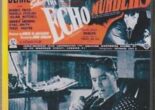
The 1945 British wartime thriller film The Echo Murders stars David Farrar in his second and last outing as the famous fictional British detective Sexton Blake.
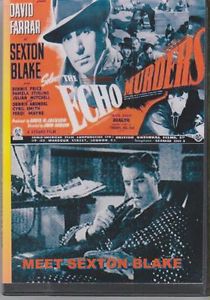
Writer/ director John Harlow’s likeable 1945 British wartime mystery thriller film The Echo Murders is based on the story The Terror of Tregarwyth by Hector Hawton [writing as John Sylvester], and stars David Farrar, Dennis Price, and Pamela Stirling.
The reliable actor David Farrar is well cast and entirely acceptable in a slightly stiff but solid performance as the famous fictional British detective Sexton Blake, in this modest, mildly entertaining movie. It tells a traditional tale but with a wartime spin, in which Blake investigates the murder of mine boss James Duncan (Julien Mitchell) and pretends to be dead to round up wartime German spies who are based in Cornish tin mines. Just before he is shot dead at his desk, James Duncan makes a phonograph, confessing his crimes and misdemeanours, and desperately seeking the assistance of Sexton Blake. The great detective is on the next train to Cornwall to sort out the mess. He is welcomed by the local police with surprising open arms. He is, apparently, a national celebrity and treasure.
[Spoiler alert] David Farrar is perhaps not especially exciting or charismatic, but he is a decent physical presence, handling the interrogations and action well. Sexton Blake here is so much like Sherlock Holmes, pipe smoking, into disguises, and even living in Baker Street! Affected and mannered in the British acting style of the period, Pamela Stirling is weak and feeble in virtually the sole female role as the mine boss’s plummy and unfeisty daughter Stella Duncan and Dennis Price makes little impression as her betrothed, Dick Warren, but then their roles are weak too.
[Spoiler alert] Luckily, there is a lot of space for the character actors, and a good gallery of them to liven things up, notably including Cyril Smith as Police Constable Smith, Dennis Arundell as Rainsford, Ferdy Mayne as Dacier, Johnnie Schofield as Purvis, Paul Croft as Marat, Kynaston Reeves as Beales, Desmond Roberts as Cotter, Danny Green as Carl, Patric Curwen as Dr Grey, and Tony Arpino as Fox. This is a fine team of eccentrics, most of them bad guys, some of them very bad. Ferdy Mayne is excellent as minor villain Dacier, but Kynaston Reeves is outstanding as the main villain Beales, starting as a cuddly befuddled eccentric and ending as a super sinister nasty.
The wildly far-fetched plot is extremely intricate and involved, entirely enjoyable enough, entirely hard enough to follow, though perhaps it would be better off without the Nazis, but then it is a wartime paranoia movie. There are a lot of dead folks, as you might expect, but a surprising amount of threat and action (fisticuffs and gunplay) for a mystery thriller, with a full-on battle ending in the mine. Maybe it is a bit over-ambitious, especially for a medium budget double feature, but that’s not much of a fault.
There is a tiny little bit of comedy, but thankfully hardly any. Refreshingly, there is no love interest for Sexton Blake. He isn’t that kind of chap anyway, is he? He seems to be a natural bachelor. He does, however, have a Housekeeper, just like Sherlock Holmes. She is played the film’s sole other female Olive Walter, who deserves better than her one scene, one joke appearance, though she makes it count. Sexton doesn’t have a Dr Watson to spark off, though, and at the end it’s just the great detective alone with his pipe in a railway carriage, looking thoughtful as the world goes by outside his window.
The current print looks terrible. Sometimes it’s so dark it’s hard to tell what’s going on. Well, it adds to the mystery. But it needs a restoration. By the way, everything about it looks antediluvian, with the props in seeming Victorian/ Sherlock Holmes style, so it’s a shock to find it’s 1945 and there are Nazis. The world must have moved on dramatically after the war finished, as technology, prompted by wartime experimental science, started to kick in. Poor Sherlock Holmes started to battle Nazis in America too in the Basil Rathbone film series. It just doesn’t quite work.
Percival Mackey’s score is splendidly overwrought, stirring up a racket of excitement just when plenty is already going on.
John Harlow’s screenplay is taken from the story The Terror of Tregarwyth by John Sylvester, writing as John Sylvester.
Release date: 17 December 1945 (UK).
It is made and produced at National Studios, Elstree, Hertfordshire, England.
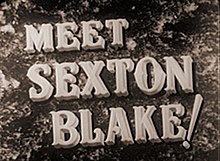
David Farrar also previously played Sexton Blake in Meet Sexton Blake (1945), released on 5 February 1945 (UK).
The fictional British detective Sexton Blake appeared in stories published over eight decades from 1893 to 1978, featuring in more than 4,000 stories by around 200 different authors.
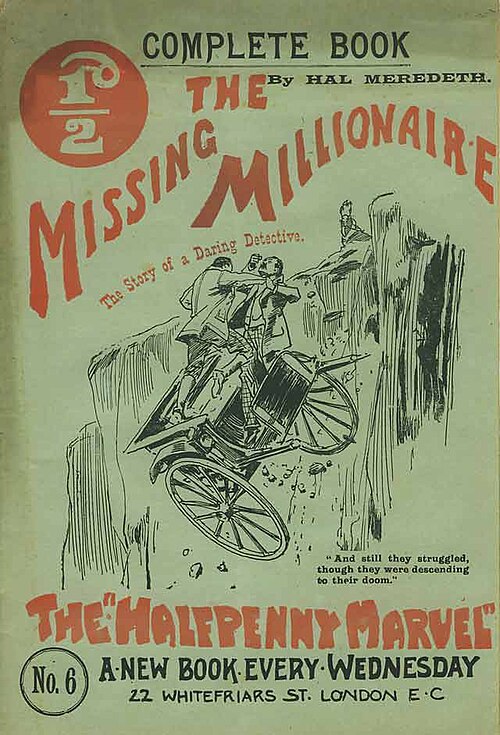
The first Sexton Blake story was The Missing Millionaire, written by Harry Blyth (as Hal Meredeth), and published in The Halfpenny Marvel number 6, on 20 December 1893.
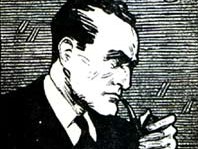
Cast: David Farrar as Sexton Blake, Dennis Price as Dick Warren, Pamela Stirling as Stella Duncan, Julien Mitchell as James Duncan, Cyril Smith as Police Constable Smith, Dennis Arundell as Rainsford, Ferdy Mayne as Dacier, Johnnie Schofield as Purvis, Paul Croft as Marat, Kynaston Reeves as Beales, Desmond Roberts as Cotter, Danny Green as Carl, Patric Curwen as Dr Grey, Tony Arpino as Fox, Vincent Holman as Colonel Wills, Gerald Pring as Sir Horace Cranston, Tony Arpino as Fox, Howard Douglas, Billy Howard, Anders Timberg as Wrexham, H Victor Weske as Otto, Noel Dainton as Van Schuster, Charles Hersee as Landlord, Olive Walter as Housekeeper.
The Echo Murders is directed by John Harlow, runs 75 minutes is made by British National Films and Strand Film Company, is released by Anglo-American Film Corporation (UK), is written by John Harlow, is shot in black and white by James Wilson, is produced by Louis H Jackson, and is scored by Percival Mackey.
Basil Rathbone battled Nazis in three of his Sherlock Holmes films: Sherlock Holmes and the Voice of Terror (1942), Sherlock Holmes and the Secret Weapon (1943) and Sherlock Holmes in Washington (1943).
© Derek Winnert 2026 – Classic Movie Review 13,938
Check out more reviews on http://derekwinnert.com

Recent articles
- Black Patch *** (1957, George Montgomery, Diane Brewster, Tom Pittman, Leo Gordon, Sebastian Cabot, Lynn Cartwright) – Classic Movie Review 14,02131 Aug 2026
- Sorry Angel [Plaire, aimer et courir vite] ****(Pierre Deladonchamps, Vincent Lacoste, Denis Podalydès, Thomas Gonzalez, 2018) – Classic Movie Review 14,02030 Aug 2026
- Date with Disaster *** (1957, Tom Drake, William Hartnell, Shirley Eaton, Maurice Kaufmann, Michael Golden, Richard Shaw) – Classic Movie Review 14,01929 Aug 2026
- Travis Mc Gee *** (1983, Sam Elliott, Richard Farnsworth, Gene Evans, Barry Corbin, Geoffrey Lewis, Amy Madigan, Vera Miles, Katharine Ross, Marshall R Teague) – Classic Movie Review 14,01825 Aug 2026
- Tethered Wings [Les ailes collées] *** (2025, Roby Schinasi, Jérémy Kapone, Émilie Caen, Max Libert, Alexis Rosenstiehl) – Classic Movie Review 14,01723 Aug 2026
Recent comments
- The President’s Lady ** (1953, Charlton Heston, Susan Hayward, John McIntire, Fay Bainter) – Classic Movie Review 13,846 | Derek Winnert on The Buccaneer *** (1958, Yul Brynner, Claire Bloom, Charles Boyer, Inger Stevens, Henry Hull, Charlton Heston) – Classic Movie Review 13,844
- Straight Up *** (2019, James Sweeney, Katie Findlay, Dana Drori, James Scully, Tracie Thoms, Betsy Brandt, Randall Park) – Classic Movie Review 13,839 | Derek Winnert on Twinless **** (2025, Dylan O'Brien, James Sweeney, Aisling Franciosi) – Classic Movie Review 13,838
- Phantom Killer ** (1942, Dick Purcell, Joan Woodbury, John Hamilton, Warren Hymer) – Classic Movie Review 13,837 | Derek Winnert on The Sphinx ** (1933, Lionel Atwill, Sheila Terry, Theodore Newton) – Classic Movie Review 13,836
- Detour ***** (1945, Tom Neal, Ann Savage, Claudia Drake, Edmund MacDonald) – Classic Movie Review 1,547 | Derek Winnert on The Last Crooked Mile *** (1946, Don Barry, Ann Savage, Adele Mara, Tom Powers, Sheldon Leonard, Nestor Paiva) – Classic Movie Review 13,834
- Big ***** (1989, Tom Hanks, John Heard, Jared Rushton, Robert Loggia, David Moscow, Mercedes Ruehl, Jon Lovitz, Josh Clark, Kimberlee M Davis, Elizabeth Perkins) – Classic Movie Review 287 | Derek Winnert on 18 Again! *** (1988, George Burns, Charlie Schlatter, Tony Roberts, Anita Morris, Red Buttons, Pauly Shore) – Classic Movie Review 13,815