
The Third Man ***** (1949, Orson Welles, Joseph Cotten, Alida Valli, Trevor Howard, Bernard Lee, Wilfrid Hyde White) – Classic Movie Review 170
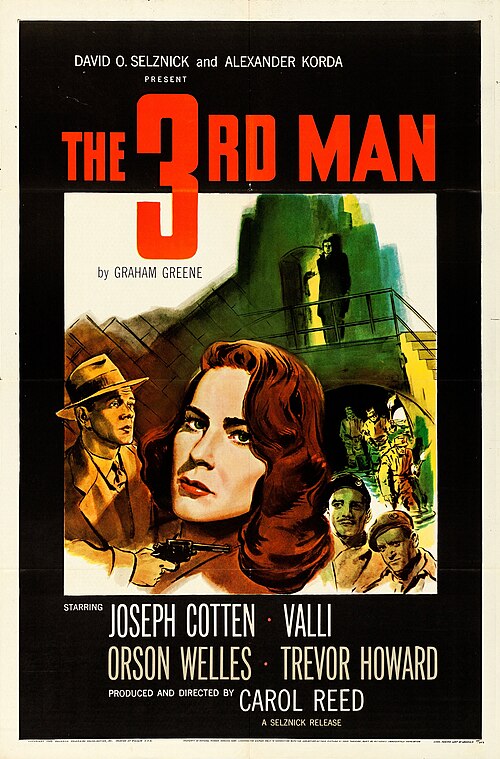
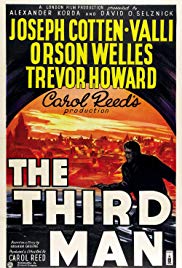
Carol Reed’s legendary 1949 noir thriller masterwork movie The Third Man was the winner of the Palme d’Or at Cannes in 1949 and the Bafta for Best British Film in 1950.
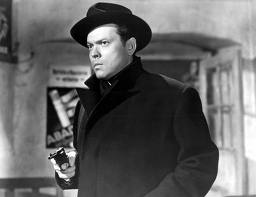
‘You know what the fellow said – in Italy, for 30 years under the Borgias, they had warfare, terror, murder and bloodshed; but they produced Michelangelo, Leonardo da Vinci and the Renaissance. In Switzerland, they had brotherly love; they had 500 years of democracy and peace – and what did that produce? The cuckoo clock!’ – Harry Lime.
Director Carol Reed’s legendary 1949 haunting thriller masterwork The Third Man was the winner of the Palme d’Or at Cannes in 1949 and the Bafta for Best British Film in 1950. It makes a glorious job of filming Graham Greene’s famous story about a boozy, washed-up American pulp cowboy author called Holly Martins (Joseph Cotten) searching for his mysterious black marketeer old buddy Harry Lime (Orson Welles) in World War Two-ravaged Vienna.
In a Vienna divided into sectors by the victorious allies, supplies are low, crime is rife, life is cheap. Just the place for a man like Harry Lime to prosper.
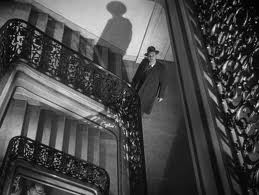
But Martins finds the first news isn’t good. Lime, who has been tampering with penicillin for profit, is dead, supposedly in a bizarre traffic accident. Mmm, that’s odd. Worried about inconsistencies in reports from Lime’s friends and colleagues, Martins decides to investigate. But finally, the much talked about, highly elusive Harry Lime appears alive and well magically from the shadows, smugly smiling and oozing evil, like a malignant spirit.
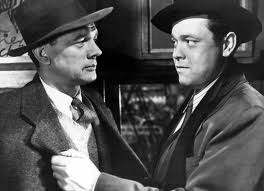
In a tour-de-force performance Cotten subtly, quietly and intensely buttonholes the attention, backed up in his scenes with help from dependable British worthies Trevor Howard (as the British major), Bernard Lee (as his sergeant) and Wilfrid Hyde White (as Mr Crabbin, an amalgamation of the Charters and Caldicott characters in the original script), as well as alluring, smouldering Alida Valli, as the femme fatale Anna Schmidt, Lime’s devoted girlfriend.
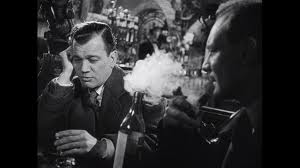
Reed directs this British classic with great style and feeling, conjuring up some of the cinema’s most magical set pieces, among them the visit to the ferris wheel (built 1897), Welles’s cuckoo clock speech, the celebrated chase through the city’s sewers and the surprise, bravura-shot conclusion which seems to go on for ever.
Reed shows a lot of nerve and it pays off big time.
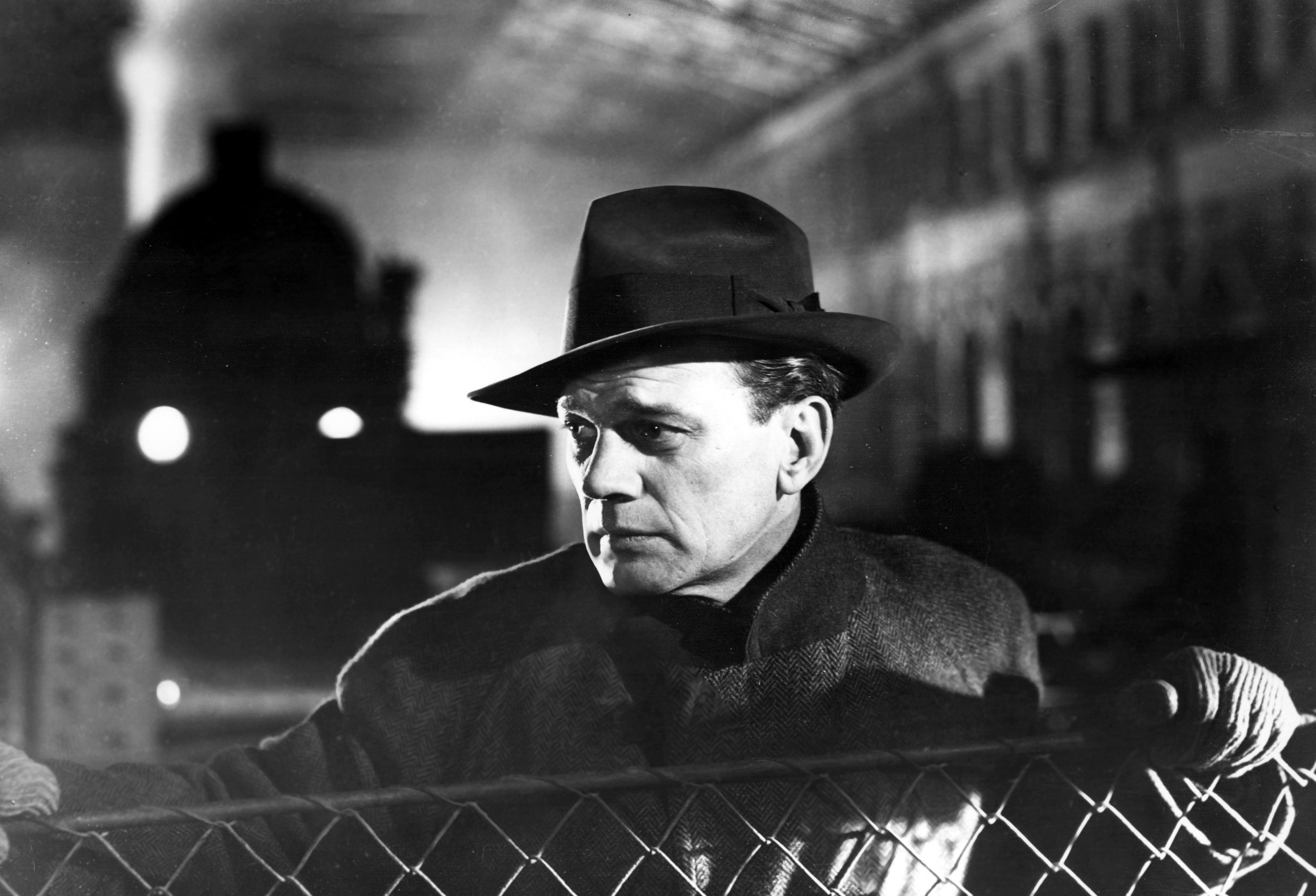
Other essential highlights include Anton Karas’s superb famous zither-dominated score and Robert Krasker’s eye-catching, shadowy, noirish Oscar-winning cinematography (deplorably the film’s only Oscar).
Without these two vital contributions, the movie would be so much more ordinary, not much more than just another thriller. They help to propel it to greatness.
The film’s assistant director Guy Hamilton recalled that Reed met Karas by chance at a party in Vienna, where he was playing the zither, then brought him to London, where he worked with Reed on the score for six weeks. Australian-born composer Hubert Clifford wrote additional music as Michael Sarsfield.
The film’s trailer says that ‘the famous musical score by Anton Karas will have the audience in a dither with his zither’. ‘The Third Man Theme’ was released as a single in 1949 and became a hit, selling 300,000 records in Britain by November 1949,

The Lime character is based on British double agent Kim Philby, Greene’s boss in the British Secret Intelligence Service in the war.
Lime’s hands groping through the sewer to freedom are in fact director Reed’s.
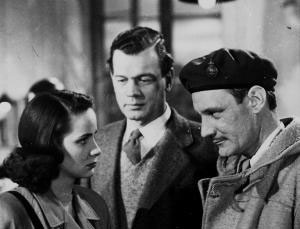
Lucky to get the role as he was considered box-office poison by producer David O Selznick, Welles nevertheless acted like a prima donna. He arrived belatedly in Vienna, then refused to do several scenes in the filthy sewer, so body doubles were used, with assistant director Guy Hamilton standing in, and later sewer set reproductions had to be built back in the studio in the UK.
Contrary to legend, Welles did not direct any of the film and the only script contributions from him were improvisations about stomach pains and the cuckoo clock speech.
Graham Greene recalled: ‘The popular line of dialogue concerning Swiss cuckoo clocks was written into the script by Mr Welles himself. During the shooting it was found necessary for the timing to insert another sentence.’ Welles said the lines came from ‘an old Hungarian play’. He acknowledged that the idea is not original to him by his starting phrase ‘You know what the fellow said’.
The British original runs 104 minutes, but Selznick’s much-tampered-with US version runs only 93 minutes, which replaces Carol Reed’s voice-over describing post-war Vienna from a racketeer’s point of view with narration by Cotten as Holly Martins.
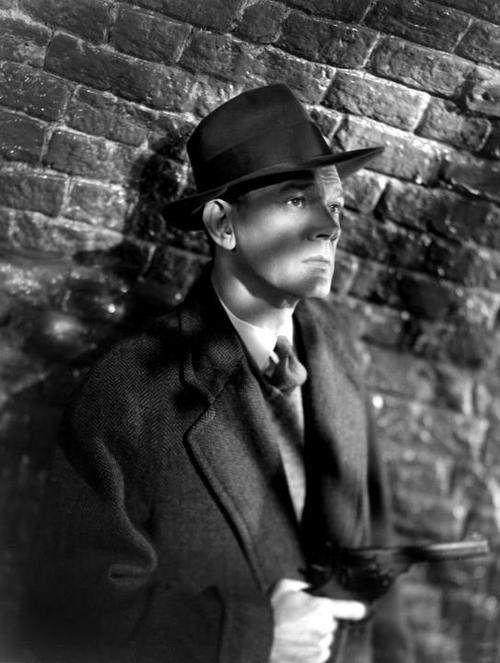
Also in the cast are Paul Hoerbiger [Hörbiger], Ernst Deutsch, Siegfried Breuer, Erich Ponto, Hedwig Bleibtreu and Paul Carpenter.
The tunnels in the film are part of the Wienkanal that takes the River Wien through Vienna to the Danube. Daily tours operate through the canal system, with events held to celebrate the film, so you can join in.
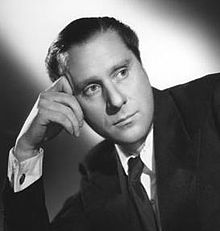
In 1953 Reed became only the second British film director to be knighted for film-making. Graham Greene said that Reed is ‘the only director I know with that particular warmth of human sympathy, the extraordinary feeling for the right face in the right part, the exactitude of cutting and the power of sympathising with an author’s worries and an ability to guide him.’ Michael Powell added that Reed ‘could put a film together like a watchmaker puts together a watch.’
From December 2014 to May 2015, DeLuxe Media painstakingly oversaw the film’s splendid 4K restoration from a master negative located at the BFI. It was back in cinemas on June 26 2015 and on DVD on July 20 2015.
StudioCanal released a 4K restoration of the film to celebrate its 75th anniversary In September 2024 with a short run in UK cinemas and later released on 4K Blu-ray.
Crew
The Third Man is directed by Carol Reed, runs 104 minutes (or 93 minutes), is made by London Films, is released by British Lion Film Corporation (UK) and Selznick Releasing Organization (US), is written by Graham Greene, is shot in black and white by Robert Krasker, is produced by David O Selznick, Alexander Korda and Carol Reed, and is scored by Anton Karas.
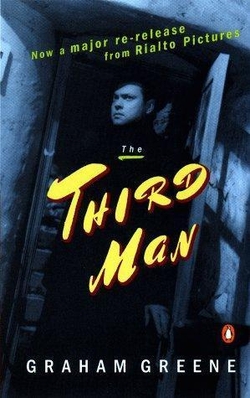
Graham Greene novella
Graham Greene wrote a novella as a treatment for the screenplay, feeling that he needed to write the story first. He did not initially intend to publish it but it was published as a standalone work in 1950. He said he had written the opening paragraph 20 years before on the back of an envelope before producer Alexander Korda approached him about writing a screenplay. Greene and Reed had daily discussions and made changes during filming, though Greene opposed the biggest change Reed made, the film’s famous unhappy ending.
The cast
The cast are Joseph Cotten as Holly Martins, Alida Valli [Valli] as Anna Schmidt, Orson Welles as Harry Lime, Trevor Howard as Major Calloway, Paul Hörbiger as Lime’s porter Karl, Ernst Deutsch as ‘Baron’ Kurtz, Erich Ponto as Dr Winkel, Siegfried Breuer as Popescu, Hedwig Bleibtreu as Anna’s landlady, Bernard Lee as Sergeant Paine, Wilfrid Hyde-White as Crabbin, Alexis Chesnakov as Brodsky, Russian official, Herbert Halbik as Hansel, Leo Bieber as barman Casanova, Robert Brown as British MP, Geoffrey Keen as British MP, Reed De Rouen as American MP, Paul Hardtmuth as Hotel Sacher porter, Annie Rosar as porter’s wife, Eric Pohlmann as Smolka’s waiter, Brother Theodore as man on street, Nelly Arno as Kurtz’s mother, Karel Štěpánek as Josefstadt Theatre actor and Paul Carpenter.
Release dates: 1 September 1949 (UK) and 2 February 1950 (US).
© Derek Winnert 2013 Classic Movie Review 170
Check out more reviews on http://derekwinnert.com/

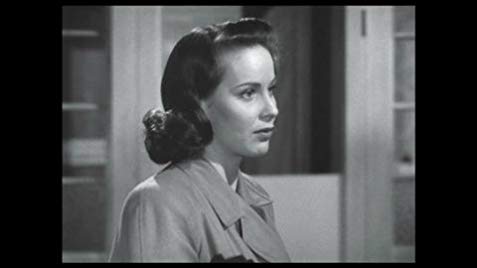
Alida Valli in The Third Man (1949).

Recent articles
- Sorry Angel [Plaire, aimer et courir vite] ****(Pierre Deladonchamps, Vincent Lacoste, Denis Podalydès, Thomas Gonzalez, 2018) – Classic Movie Review 14,02030 Aug 2026
- Date with Disaster *** (1957, Tom Drake, William Hartnell, Shirley Eaton, Maurice Kaufmann, Michael Golden, Richard Shaw) – Classic Movie Review 14,01929 Aug 2026
- Travis Mc Gee *** (1983, Sam Elliott, Richard Farnsworth, Gene Evans, Barry Corbin, Geoffrey Lewis, Amy Madigan, Vera Miles, Katharine Ross, Marshall R Teague) – Classic Movie Review 14,01825 Aug 2026
- Tethered Wings [Les ailes collées] *** (2025, Roby Schinasi, Jérémy Kapone, Émilie Caen, Max Libert, Alexis Rosenstiehl) – Classic Movie Review 14,01723 Aug 2026
- Child in the House ** (1956, Eric Portman, Phyllis Calvert, Stanley Baker, Mandy Miller) – Classic Movie Review 14,01622 Aug 2026
Recent comments
- The President’s Lady ** (1953, Charlton Heston, Susan Hayward, John McIntire, Fay Bainter) – Classic Movie Review 13,846 | Derek Winnert on The Buccaneer *** (1958, Yul Brynner, Claire Bloom, Charles Boyer, Inger Stevens, Henry Hull, Charlton Heston) – Classic Movie Review 13,844
- Straight Up *** (2019, James Sweeney, Katie Findlay, Dana Drori, James Scully, Tracie Thoms, Betsy Brandt, Randall Park) – Classic Movie Review 13,839 | Derek Winnert on Twinless **** (2025, Dylan O'Brien, James Sweeney, Aisling Franciosi) – Classic Movie Review 13,838
- Phantom Killer ** (1942, Dick Purcell, Joan Woodbury, John Hamilton, Warren Hymer) – Classic Movie Review 13,837 | Derek Winnert on The Sphinx ** (1933, Lionel Atwill, Sheila Terry, Theodore Newton) – Classic Movie Review 13,836
- Detour ***** (1945, Tom Neal, Ann Savage, Claudia Drake, Edmund MacDonald) – Classic Movie Review 1,547 | Derek Winnert on The Last Crooked Mile *** (1946, Don Barry, Ann Savage, Adele Mara, Tom Powers, Sheldon Leonard, Nestor Paiva) – Classic Movie Review 13,834
- Big ***** (1989, Tom Hanks, John Heard, Jared Rushton, Robert Loggia, David Moscow, Mercedes Ruehl, Jon Lovitz, Josh Clark, Kimberlee M Davis, Elizabeth Perkins) – Classic Movie Review 287 | Derek Winnert on 18 Again! *** (1988, George Burns, Charlie Schlatter, Tony Roberts, Anita Morris, Red Buttons, Pauly Shore) – Classic Movie Review 13,815