
The Spy Who Came in from the Cold ***** (1965, Richard Burton, Oskar Werner, Claire Bloom, Sam Wanamaker, Peter Van Eyck) – Classic Movie Review 2,112
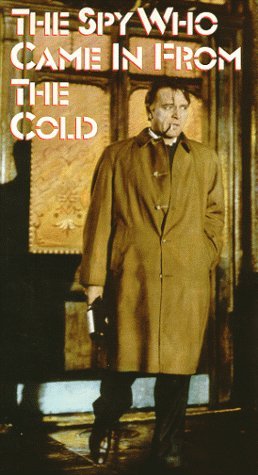
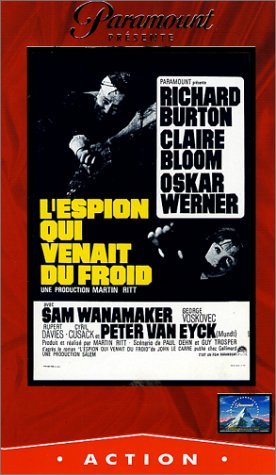
Martin Ritt’s scintillating 1965 British spy film The Spy Who Came In from the Cold is based on the 1963 novel by John le Carré, and stars Richard Burton, Claire Bloom and Oskar Werner.
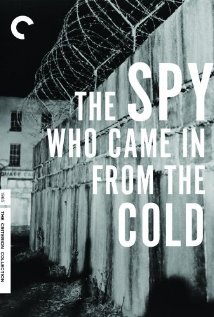
Director Martin Ritt’s scintillating 1965 British spy film The Spy Who Came In from the Cold is based on the 1963 novel by John le Carré, and stars Richard Burton, Claire Bloom, and Oskar Werner.
Director Martin Ritt’s scintillating, nerve-jangling 1965 movie version of John le Carré’s early classic 1963 Cold War spy novel The Spy Who Came in from the Cold gives Richard Burton an unforgettable opportunity to be fascinating.
He gives a great workout to his main strengths as an actor, a masterclass in how to be wrecked, remote, morose, haunted and intriguing. And this is a this top-notch, convincingly gritty version of the twisty le Carré espionage tale.
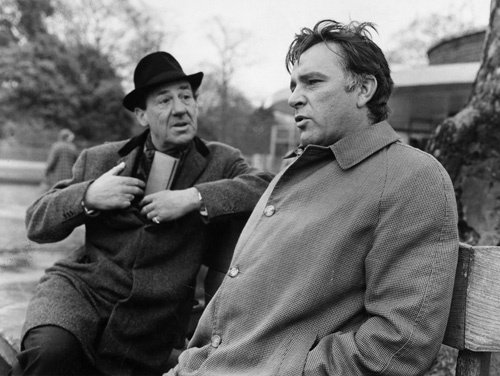
Burton is stupendous in one of his best performances as the embittered, tormented English MI6 spy Alec Leamas, who is recruited and taken to East Germany as a traitor, under cover of being supposedly dismissed by the British secret intelligence service, to ensnare an old foe called Hans-Dieter Mundt (Peter Van Eyck).
Introduced to his main interrogator Fiedler (Oskar Werner), Leamas carries out his secret mission to share disinformation that suggests Mundt is a paid British informant.
Director Ritt goes for heightened realism and captures the bleak, world-weary mood and desperate atmosphere of the tawdry spy game perfectly through Paul Dehn and Guy Trosper’s compellingly dour screenplay and Oswald Morris’s strikingly stark black and white cinematography, which is just plain masterly. There is a whole load of dialogue throughout, at the expense of action, so it’s just as well that the dialogue is so classy.
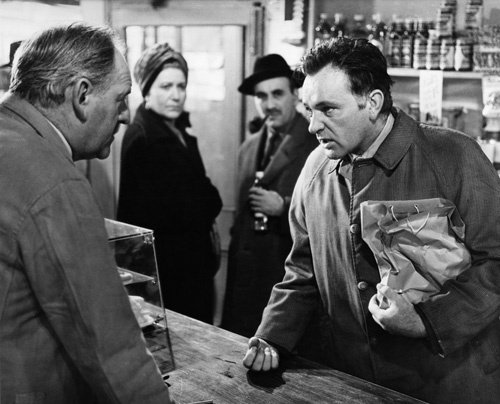
Thanks to the engrossing story and exciting performances and mesmerising atmosphere, The Spy Who Came in from the Cold really exerts a tight hold from early on and never gives up its white-knuckle grasp. Unlike, say, Tinker Tailor or Smiley’s People, the story is quite simple and straightforward. It’s no effort to follow the plot, though its early couple of twists and then its final couple of twists help to make it complex and very satisfying, The Alec Leamas character is extraordinarily unsympathetic for a mainstream movie’s protagonist, racist and homophobic, as well as violent, and the story is immensely bleak, quite a depressing downer, without a happy ending in sight.
There is also resoundingly striking work from Oskar Werner as Leamas’s German contact Fiedler and Claire Bloom as his lover Nan Perry (changed from Liz Gold in the novel), even if she is far too old at 34 playing a teenager. These are two very special performances to be savoured and relished.
Cyril Cusack has one short blaze of glory as Leamas’s boss Control, basically the M character in the rival Bond films, and Peter Van Eyck is chilling as the high-ranking East German intelligence officer Mundt.
Also with memorable scenes to perform are Michael Hordern as the helpful Ashe (dismissed by Leamas as a ‘Queer’), Robert Hardy as Ashe’s supercilious boss Dick Carlton, Bernard Lee (M, or control in the rival Bond films) as the kindly shop-keeper Patmore (attacked by Leamas), Beatrix Lehmann as the East German Tribunal President and George Voskovec as the East German defence attorney.
Going undercover, Leamas gets a job in a library, run by the strict and imperious Miss Crail (an amusing Anne Blake), which is where he meets the CND-supporting communist Nan Perry, who likes the look of Leamas, though he looks way too old, wrecked and just plain wrong for her. Ah, well, Leamas is played by Richard Burton, so he must have something going for him.
Also in the sterling Sixties cast are Sam Wanamaker as Peters, Rupert Davies as George Smiley, Cyril Cusack as Control, Michael Hordern as Ashe, Robert Hardy as Dick Carlton, Bernard Lee as Patmore, Beatrix Lehmann as Tribunal President, Esmond Knight as Old Judge, Tom Stern as CIA Agent, Niall MacGinnis as Checkpoint Charlie Guard, Scott Finch as German Guide, Anne Blake as Miss Crail, George Mikell as Checkpoint Charlie Guard, Richard Marner as Vopo Captain, Warren Mitchell as Mr Zanfrello, Steve Plytas as East German Judge, Richard Caldicot as Mr Pitt, Nancy Nevinson as Mrs. Zanfrello, and Michael Ripper as Mr Lofthouse.
The film follows the book’s plot closely. The name change from Liz Gold to Nan Perry is supposedly to avoid confusion with Burton’s wife, Liz [Elizabeth] Taylor.
Interiors were shot at Ardmore Studios in Ireland and Shepperton Studios in England. Dublin was used for the German exteriors. The Art Direction and Production Designs are immensely imaginative, a sort of arty version of reality, providing the ideal backgrounds for Oswald Morris’s cinematography.
Paul Dehn worked with le Carré in the Special Operations Executive as an assassin in World War Two.
Burton asked le Carré rewrite some of his dialogue on the set. He got his money’s worth.
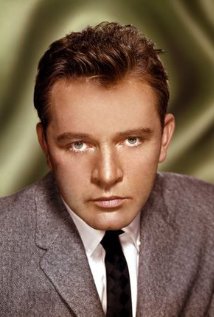
Burton was Oscar nominated in 1966 as Best Actor and failed to win. He was nominated seven times and never won. Oskar Werner won the Golden Globe for Best Supporting Actor. The film was also Oscar nominated for Best Art Direction-Set Decoration, Black-and-White.
It won four British Film Academy Awards in 1967 with Best British Film, Best British Cinematography (black and white) Best British Art Direction (black and white) (Tambi Larsen). Plus Burton won Best British Actor that year at the 1967 British Film Academy Awards for The Spy Who Came in from the Cold and for Who’s Afraid of Virginia Woolf?.
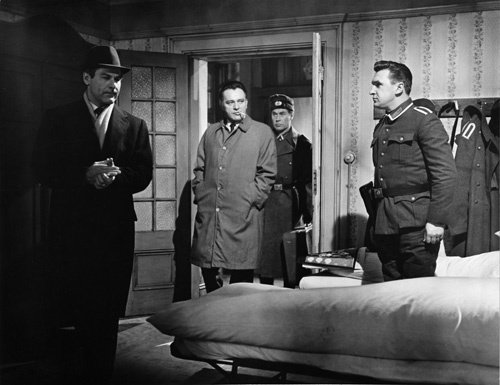
This is the first filmed adaptation of a John le Carré story and the first appearance of le Carré’s famous George Smiley character on film or TV. So Rupert Davies is the first actor to play Smiley, though disappointingly he has remarkably little to do in his couple of tiny scenes, and they are key scenes too. James Mason was the second actor to play him in The Deadly Affair (1966), also scripted by Paul Dehn, though the character was renamed Charles Dobb.
Release dates: 16 December 1965 (US) and 13 January 1966 (UK).
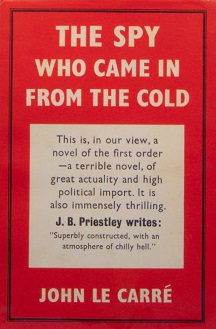
Le Carré worked for MI5 and MI6 in the 1950s and 1960s and was in Berlin where this film is partly set. Le Carré, who drew on this real life experiences for the story, was there when the Berlin Wall was being built and the novel is set about a year after that.
Le Carré’s 2017 novel A Legacy of Spies revisits characters and events from The Spy Who Came In from the Cold.
Le Carré (born David John Moore Cornwell on 19 October 1931) died at Royal Cornwall Hospital, Truro, on 12 December 2020, aged 89, after a fall at his home.
Oswald Morris died on March 17 2014, aged 98. He won a Best Cinematography Oscar for Fiddler on the Roof (1971). He won three Bafta BAFTA Film Awards, all for black and white movies, all in successive years – The Pumpkin Eater (1964), The Hill (1965) and The Spy Who Came in from the Cold (1966 UK release) – a dazzling hat trick.
In January 2017 it was announced that AMC and BBC are teaming up with Ink Factory to adapt The Spy Who Came in from the Cold as a TV series, with Simon Beaufoy writing.
© Derek Winnert 2015 Classic Movie Review 2,112
Check out more reviews on http://derekwinnert.com/

Recent articles
- Hammer the Toff *** (1952, John Bentley, Patricia Dainton, Valentine Dyall) – Classic Movie Review 13,86501 Mar 2026
- Scream 4 [SCRE4M] ** (2011, Neve Campbell, Courteney Cox, David Arquette, Hayden Panettiere, Anthony Anderson, Alison Brie, Adam Brody, Rory Culkin) – Classic Movie Review 13,86428 Feb 2026
- Best zombie movies27 Feb 2026
- King of the Zombies *** (1941, Dick Purcell, Joan Woodbury, Mantan Moreland, Henry Victor, John Archer) – Classic Movie Review 13,86326 Feb 2026
- The Lamp in Assassin Mews *** (1962, Francis Matthews, Lisa Daniely, Ian Fleming, Amy Dalby) – Classic Movie Review 13,86224 Feb 2026
Recent comments
- The President’s Lady ** (1953, Charlton Heston, Susan Hayward, John McIntire, Fay Bainter) – Classic Movie Review 13,846 | Derek Winnert on The Buccaneer *** (1958, Yul Brynner, Claire Bloom, Charles Boyer, Inger Stevens, Henry Hull, Charlton Heston) – Classic Movie Review 13,844
- Straight Up *** (2019, James Sweeney, Katie Findlay, Dana Drori, James Scully, Tracie Thoms, Betsy Brandt, Randall Park) – Classic Movie Review 13,839 | Derek Winnert on Twinless **** (2025, Dylan O'Brien, James Sweeney, Aisling Franciosi) – Classic Movie Review 13,838
- Phantom Killer ** (1942, Dick Purcell, Joan Woodbury, John Hamilton, Warren Hymer) – Classic Movie Review 13,837 | Derek Winnert on The Sphinx ** (1933, Lionel Atwill, Sheila Terry, Theodore Newton) – Classic Movie Review 13,836
- Detour ***** (1945, Tom Neal, Ann Savage, Claudia Drake, Edmund MacDonald) – Classic Movie Review 1,547 | Derek Winnert on The Last Crooked Mile *** (1946, Don Barry, Ann Savage, Adele Mara, Tom Powers, Sheldon Leonard, Nestor Paiva) – Classic Movie Review 13,834
- Big ***** (1989, Tom Hanks, John Heard, Jared Rushton, Robert Loggia, David Moscow, Mercedes Ruehl, Jon Lovitz, Josh Clark, Kimberlee M Davis, Elizabeth Perkins) – Classic Movie Review 287 | Derek Winnert on 18 Again! *** (1988, George Burns, Charlie Schlatter, Tony Roberts, Anita Morris, Red Buttons, Pauly Shore) – Classic Movie Review 13,815