
Playtime ***** (1967, Jacques Tati) – Classic Movie Review 1,662
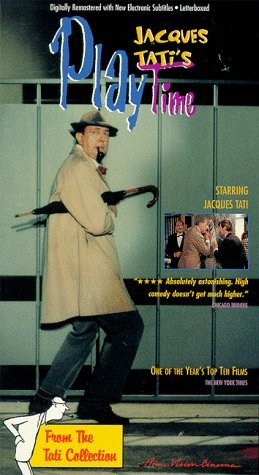
Jacques Tati’s perfectionist 1967 comedy classic film Playtime is his most ambitious project and arguably his most successful artistically.
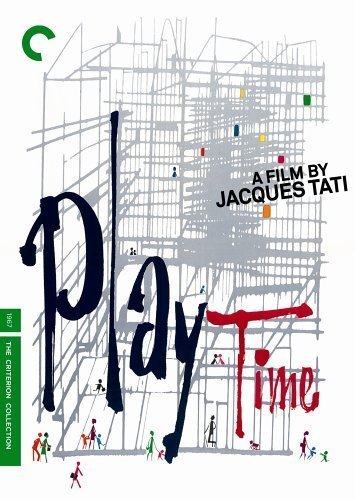
Newly restored in 4K, co-writer/director Jacques Tati’s perfectionist 1967 comedy classic Playtime gets a UK re-release on 7 November 2014. Shot on 70mm on a huge constructed set of concrete, glass and steel, the film is Tati’s most ambitious project and arguably his most successful artistically. But, sadly, it wasn’t a success at the box office and the film’s financial failure kept Tati in debt for 10 years.
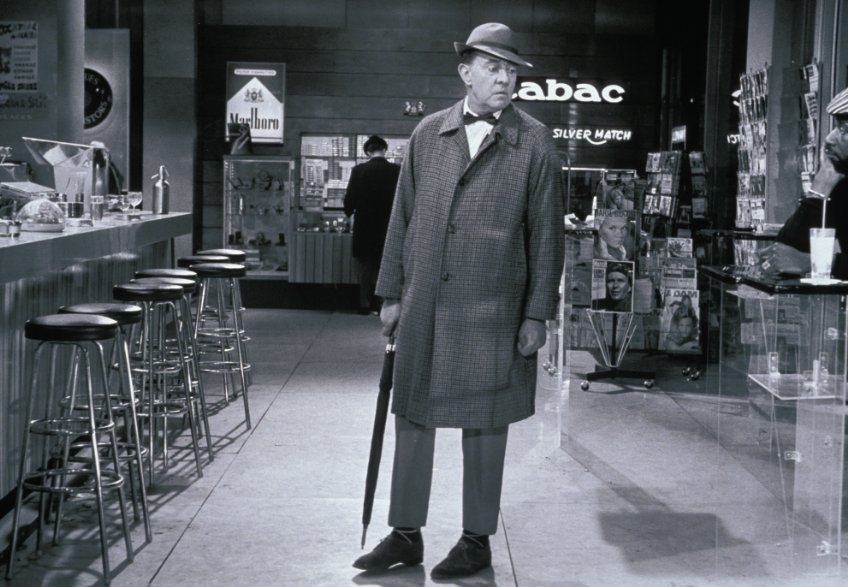
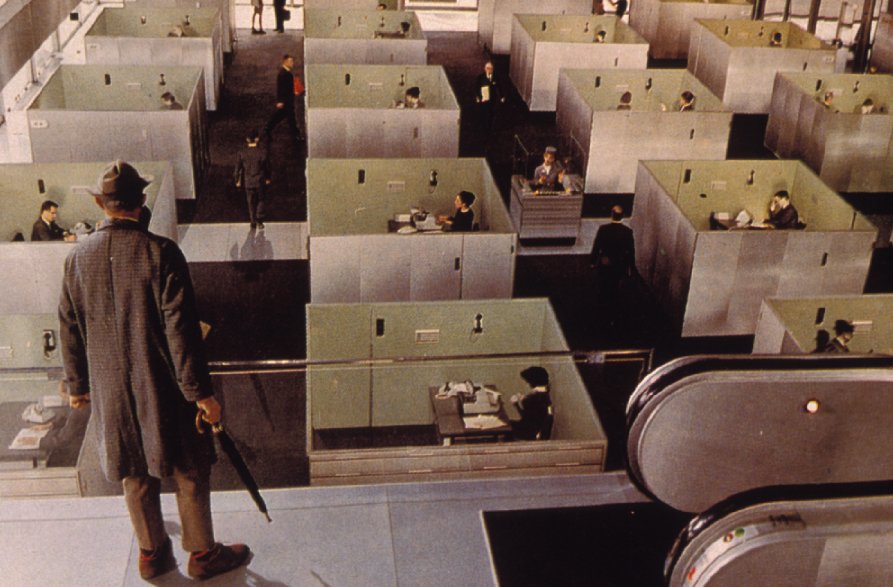
Tati’s labour of love masterpiece is a perfectly orchestrated city symphony bringing back his alter ego character Monsieur Hulot in a series of inspired gags in which he’s mixed up with American tourists on his way to an employment appointment in a nightmarish, crazily futuristic, modernist Paris that has been completely depersonalised and become totally synthetic.
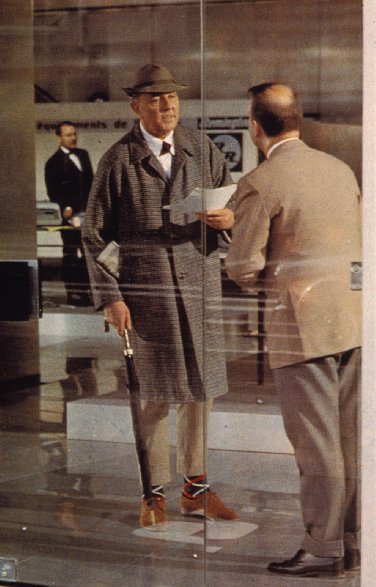
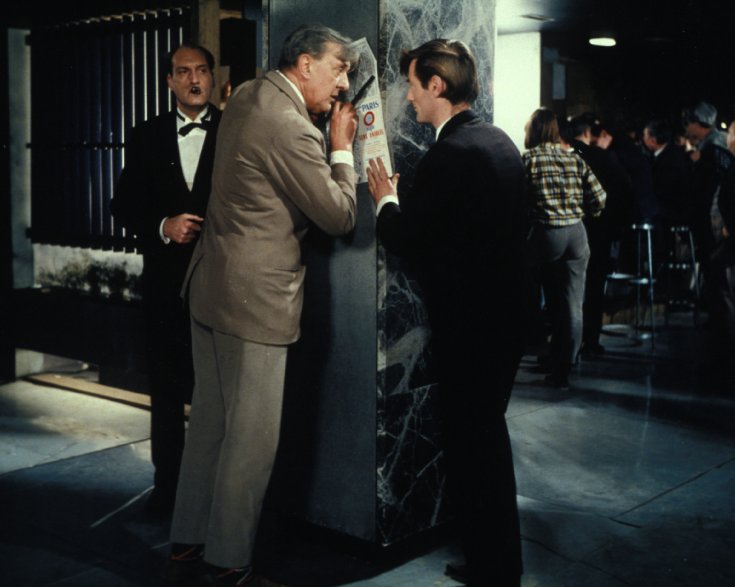
In the story, Monsieur Hulot has a job interview, but before he can worry about impressing his future employers, he’ll need to find them first. Landing up in a reimagined modernist Paris, he has to navigate endless corridors, slippery floors, sinking chairs, sliding doors and misleading reflections in a high-tech corporate labyrinth. There a kind of Kafka-esque organised chaos reigns and Hulot sticks out as an Orwellian misaligned cog in the machinery of modern life.
Bumping into old war comrades and a cute American tourist along the way, Hulot leaves the office block behind and finds himself guest of honour at the opening of Paris’s latest and worst restaurant – an establishment so new that the builders still haven’t left.
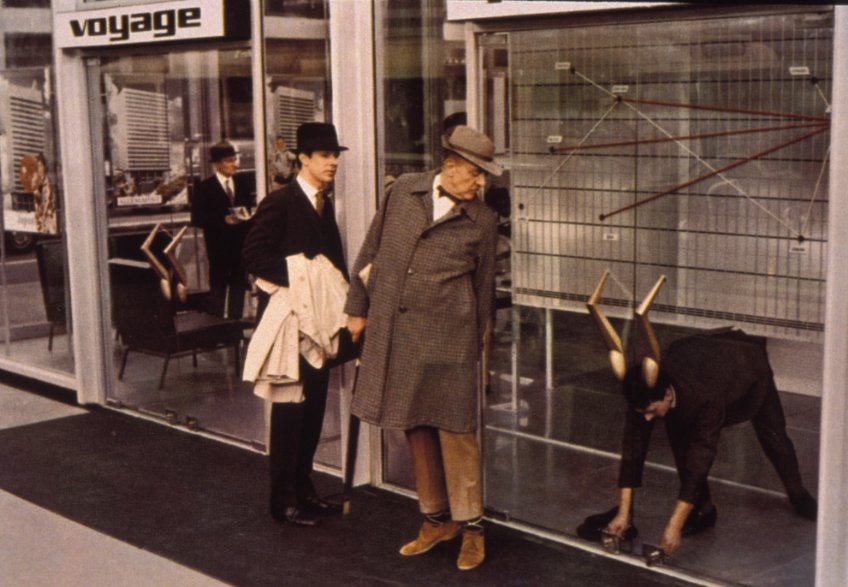
Everything hilariously conspires against Hulot, from the new high-rise buildings via the people and the objects he encounters to the cars he rides in. The scenes at the airport and the unfinished restaurant are superbly managed and are shot entirely in the studio in a dazzling feat of technical as well as artistic ingenuity.
Playtime is a wildly ambitious epic comedy running 155 minutes (with an intermission and exit music) in 70 mm six-track stereo, but the 2002 restored version runs cut American version runs only 108 minutes.
Tati grew up and lived in the old quarters of Paris, and decided to make a film about losing old Paris to a Sixties cityscape, thanks to French president Charles de Gaulle’s modernising plan. Developers knocked down older houses in urban districts, rebuilt parts of the city and suburbs, and erected brutalist high-rise blocks of glass and steel.
Tati is reprising the role of Monsieur Hulot from his earlier films Les Vacances de Monsieur Hulot (1953) and Mon Oncle (1958).
Playtime took nine years to make. At the time, Playtime was the most expensive film ever made in France and Tati had to borrow heavily from his own resources to complete it. Tati’s finances were hit hard by Playtime’s failure to recover its enormous production costs, leading him to sell his family residence. His final film Parade (1974) was released three years after Trafic.
Release date: 16 December 1967 (France).
Jacques Tati (born Jacques Tatischeff, 9 October 1907 – 5 November 1982
The master of French comedy was further celebrated through a special season at BFI Southbank in October and November 2014, featuring new restorations of his entire oeuvre. The restored Playtime screened in the French Film Festival UK in November 2014 and in selected UK cinemas nationwide.
© Derek Winnert 2014 Classic Movie Review 1,662
Check out more reviews on http://derekwinnert.com/


Recent articles
- Hammer the Toff *** (1952, John Bentley, Patricia Dainton, Valentine Dyall) – Classic Movie Review 13,86501 Mar 2026
- Scream 4 [SCRE4M] ** (2011, Neve Campbell, Courteney Cox, David Arquette, Hayden Panettiere, Anthony Anderson, Alison Brie, Adam Brody, Rory Culkin) – Classic Movie Review 13,86428 Feb 2026
- Best zombie movies27 Feb 2026
- King of the Zombies *** (1941, Dick Purcell, Joan Woodbury, Mantan Moreland, Henry Victor, John Archer) – Classic Movie Review 13,86326 Feb 2026
- The Lamp in Assassin Mews *** (1962, Francis Matthews, Lisa Daniely, Ian Fleming, Amy Dalby) – Classic Movie Review 13,86224 Feb 2026
Recent comments
- The President’s Lady ** (1953, Charlton Heston, Susan Hayward, John McIntire, Fay Bainter) – Classic Movie Review 13,846 | Derek Winnert on The Buccaneer *** (1958, Yul Brynner, Claire Bloom, Charles Boyer, Inger Stevens, Henry Hull, Charlton Heston) – Classic Movie Review 13,844
- Straight Up *** (2019, James Sweeney, Katie Findlay, Dana Drori, James Scully, Tracie Thoms, Betsy Brandt, Randall Park) – Classic Movie Review 13,839 | Derek Winnert on Twinless **** (2025, Dylan O'Brien, James Sweeney, Aisling Franciosi) – Classic Movie Review 13,838
- Phantom Killer ** (1942, Dick Purcell, Joan Woodbury, John Hamilton, Warren Hymer) – Classic Movie Review 13,837 | Derek Winnert on The Sphinx ** (1933, Lionel Atwill, Sheila Terry, Theodore Newton) – Classic Movie Review 13,836
- Detour ***** (1945, Tom Neal, Ann Savage, Claudia Drake, Edmund MacDonald) – Classic Movie Review 1,547 | Derek Winnert on The Last Crooked Mile *** (1946, Don Barry, Ann Savage, Adele Mara, Tom Powers, Sheldon Leonard, Nestor Paiva) – Classic Movie Review 13,834
- Big ***** (1989, Tom Hanks, John Heard, Jared Rushton, Robert Loggia, David Moscow, Mercedes Ruehl, Jon Lovitz, Josh Clark, Kimberlee M Davis, Elizabeth Perkins) – Classic Movie Review 287 | Derek Winnert on 18 Again! *** (1988, George Burns, Charlie Schlatter, Tony Roberts, Anita Morris, Red Buttons, Pauly Shore) – Classic Movie Review 13,815