
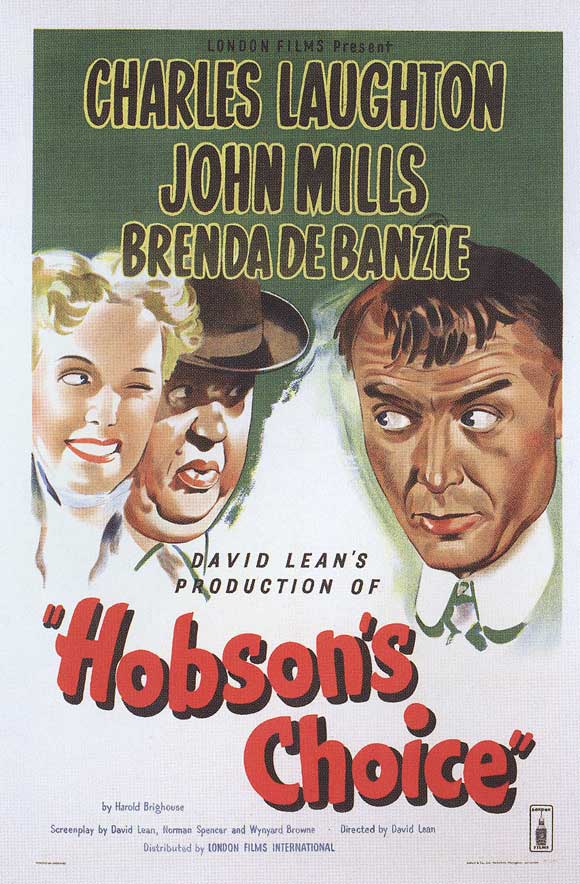
Hobson’s Choice ***** (1954, Charles Laughton, John Mills, Brenda de Banzie, Prunella Scales) – Classic Film Review 342
Charles Laughton’s larger-than-life performance as 19th-century shop owner Henry Hobson in the 1954 comedy film Hobson’s Choice is a career peak for this admired actor. It also features Prunella Scales in one of her first film roles.
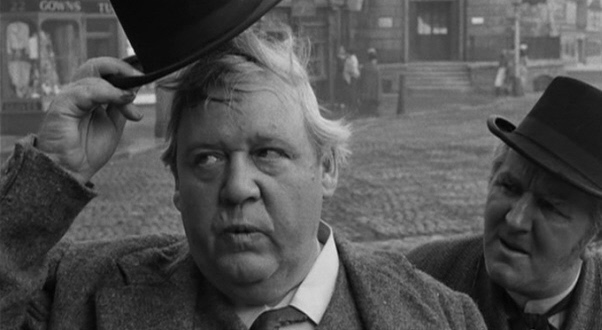
The charismatic Charles Laughton’s expertly judged, delightfully quirky and magnetically larger-than-life performance in the 1954 British comedy film Hobson’s Choice as 19th-century shop owner Henry Hobson is a greatly loved, career-peak for this admired actor.
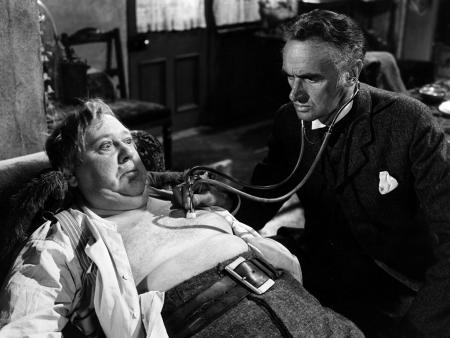
It is the heart and soul and central showpiece of director David Lean’s delicious, meticulous 1954 film of Harold Brighouse’s vintage stage comedy Hobson’s Choice, written way back in 1915 and still regularly revived on stage. No disrespect to everybody else involved, but without Laughton, this would only be half the film it is.
Hobson’s Choice won the British Academy Film Award for Best British Film in 1954 and the Golden Bear at the fourth Berlin International Film Festival in 1954. And it was a big hit at the British box office in 1954.
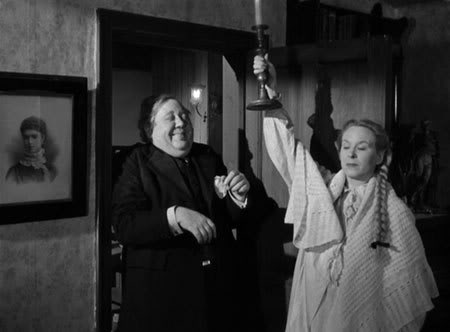
Laughton plays to the manner born the bossy Salford, Lancashire, shoe-maker, a widower who has a great natural fondness for the pub opposite. Hobson rules his three unruly daughters with a sharp tongue and orders them to remain single to avoid the expenses. But his frumpy and outspoken daughter Maggie (Brenda de Banzie) rebels and he is eventually tamed.
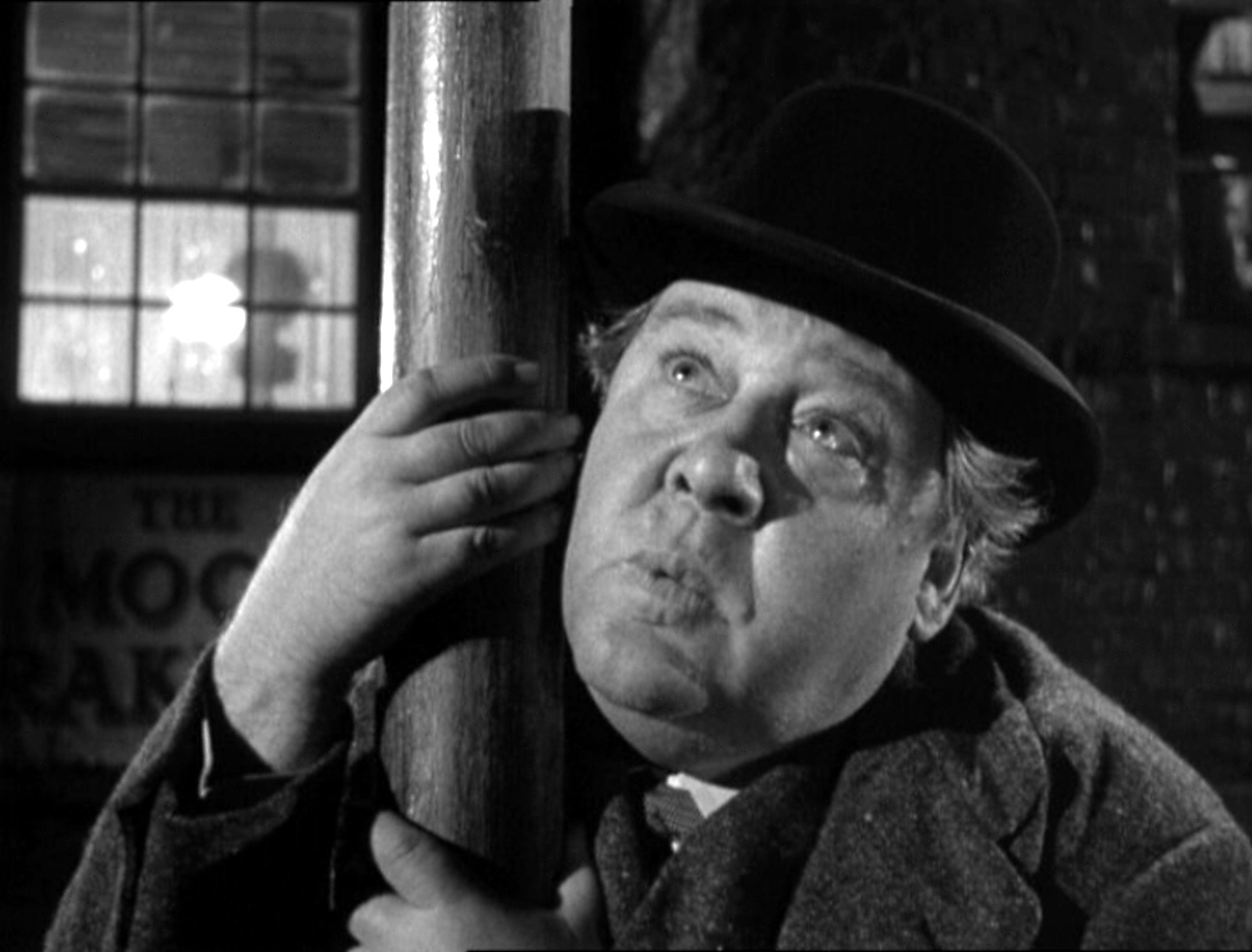
Against his wishes, she decides to marry Hobson’s unsophisticated, straightforward assistant Willie Mossop (John Mills) and gives the old man a choice. Either they’ll both quit and start up in competition or Willie will replace Hobson as the company boss. That’s Hobson’s Choice alright!
The play’s title is of course taken from the once popular expression Hobson’s choice, meaning no choice at all.
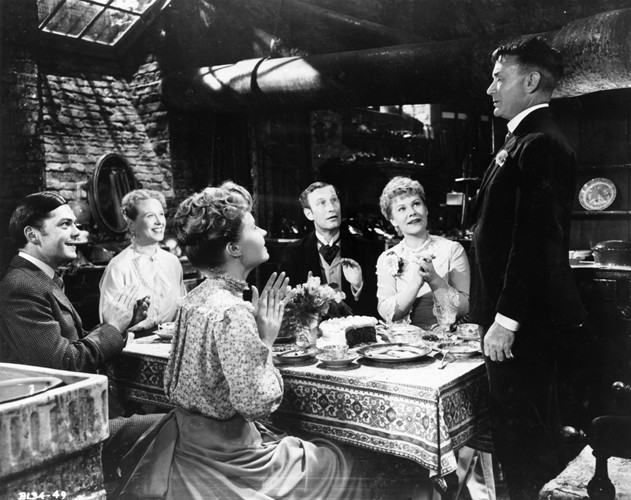
Then Maggie plots to help her sisters marry their chosen partners too. Poor old Hobson ends up eventually totally tamed and whipped by her.
[Spoiler alert] Hobson, suffering from chronic alcoholism, grudgingly has to accept Willie’s offer of a 50-50 partnership in the business, his name first on the shop’s sign, and Hobson relegated to silent partner.
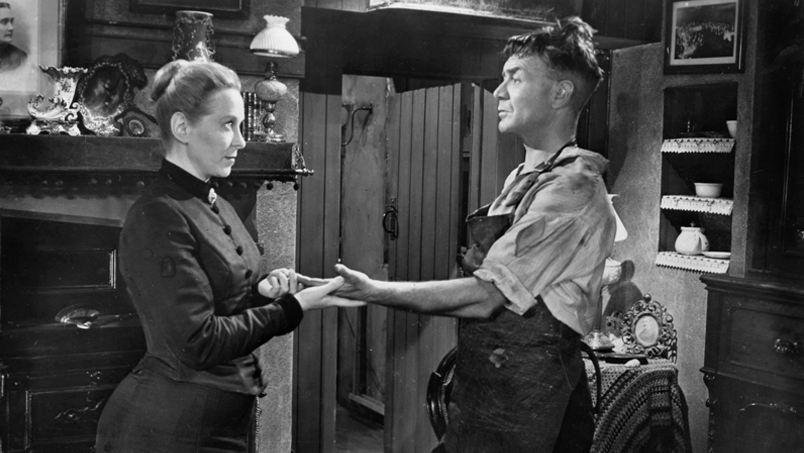
The 1890s English north-country atmosphere is beautifully captured, Lean’s smooth direction is extremely fluid and cinematic, making you forget the material was ever a stage play. And all the performances are there to be relished, with Mills and de Banzie particularly giving Laughton outstanding support. Prunella Scales plays Vicky Hobson, in only her second film at the age of 21. Who’d have thought that 50 years later she would be a long-running star of TV commercials for Tesco?
Prunella Scales had previously played Morag McLeod in Laxdale Hall (1953) but what appeared to be a promising film career never really got going. By Blind Spot (1958) she was playing Petrol pump attendant and by Room at the Top (1958) she was playing an uncredited role as Council office worker.
Richard Wattis, Helen Haye, Daphne Anderson, Raymond Huntley, Joseph Tomelty, John Laurie, Derek Blomfield, Jack Howarth, Julien Mitchell, Gibb McLaughlin, Philip Stainton, Dorothy Gordon, Madge Brindley, Herbert C Walton and Edie Martin are also in the lovely cast.
Release date: 19 April 1954.
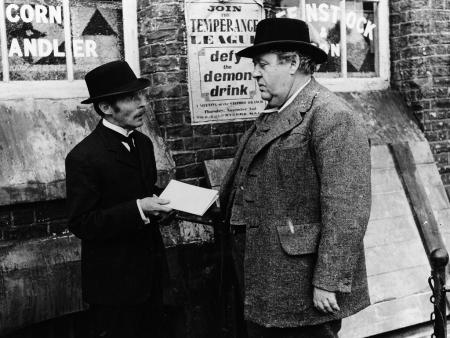
Brighouse’s incredibly popular play was also filmed in 1920, 1931 and 1983. And it was revived on the London stage in the 80s, first with Penelope Keith and Arthur Lowe, and later with Julia MacKenzie.
It was first shot as a silent film in 1920, with Joan Ritz as Maggie, Arthur Pitt as her father and Joe Nightingale in his stage role of Mossop. It was filmed with sound in 1931, with James Harcourt as Hobson, Frank Pettingell as Mossop, Joan Maude as Alice, and Viola Lyel as Maggie. This is now a lost film.
In 1962, Granada Television produced a 90-minute TV version with John Barrie as Henry Hobson, Patricia Routledge as Maggie Hobson, and Michael Caine as Willie Mossop.
The play’s first production was at the Princess Theatre in New York on 2 November 1915, transferring to London on 24 June 1916 at the Apollo Theatre. It was performed by the UK National Theatre at the Old Vic, London, in 1964, starring Michael Redgrave, Joan Plowright and Frank Finlay. Martin Shaw played Hobson in 2016 at The Vaudeville Theatre, London.
John Mills explains how he landed the role: ‘As luck would have it, Robert Donat was ill and unable to play Willie Mossop. David Lean called me while I was in Portofino [on the Italian Riviera]. Within 48 hours I was in the makeup chair at Shepperton studios having a pudding-basin haircut.’
It is shot at Shepperton Studios, Surrey, England, on sets designed by Wilfred Shingleton, and on location around Salford, with Peel Park as Maggie and Willie’s courting place.
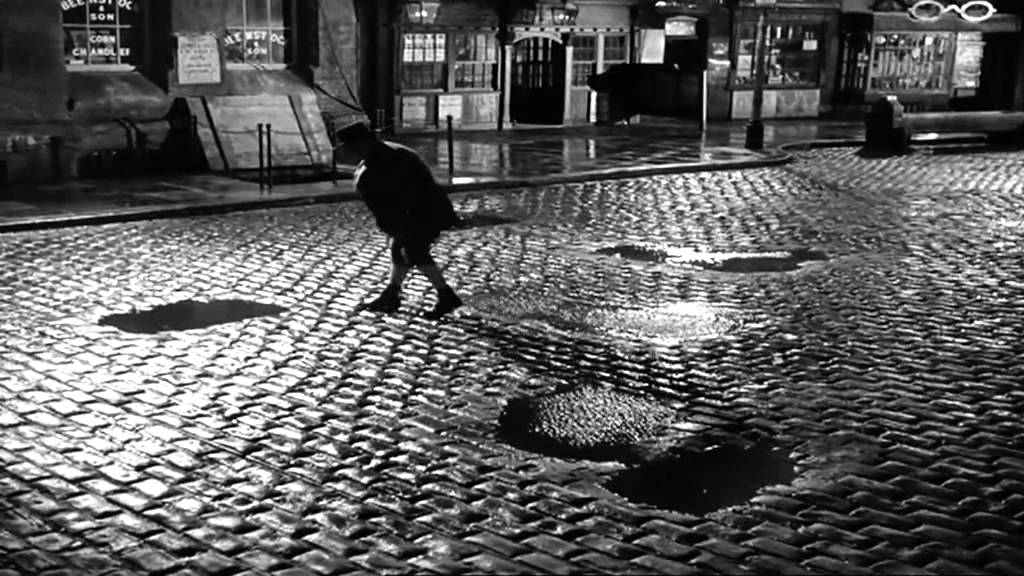
Composer Malcolm Arnold’s main comical theme comes from his opera The Dancing Master. He wrote his score for a small orchestra of 22, and hired a Belgian café owner to play the musical saw (used when Hobson sees the moon’s reflection in the puddles).
The cast
The cast are Charles Laughton as Henry Horatio Hobson, John Mills as Will Mossop, Brenda de Banzie as Maggie Hobson, Daphne Anderson as Alice Hobson, Prunella Scales as Vicky Hobson, Richard Wattis as Albert Prosser, Derek Blomfield as Freddy Beenstock, Helen Haye as Mrs Hepworth, Joseph Tomelty as Jim Heeler, Julien Mitchell as publican Sam Minns, Gibb McLaughlin as Tudsbury, Philip Stainton as Denton, Dorothy Gordon as Ada Figgins, Madge Brindley as Mrs Figgins, John Laurie as Dr MacFarlane, Raymond Huntley as Nathaniel Beenstock, Jack Howarth as Tubby Wadlow, Herbert C. Walton as Printer, and Edie Martin as Old Lady Buying Bootlaces.
Prunella Scales (22 June 1932 – 27 October 2025)
Prunella Scales recalled: ‘When I tested for the part, David sat behind the camera and interviewed me in character. He was always extremely kind during the shoot and one day he said, ”Make sure your next film is in colour. It’ll suit you better than black and white.” I’m afraid I didn’t fulfil his hopes, having had a rather sketchy career in films.’
© Derek Winnert 2013 Classic Movie Review 342
Check out more reviews on http://derekwinnert.com

Recent articles
- Hammer the Toff *** (1952, John Bentley, Patricia Dainton, Valentine Dyall) – Classic Movie Review 13,86501 Mar 2026
- Scream 4 [SCRE4M] ** (2011, Neve Campbell, Courteney Cox, David Arquette, Hayden Panettiere, Anthony Anderson, Alison Brie, Adam Brody, Rory Culkin) – Classic Movie Review 13,86428 Feb 2026
- Best zombie movies27 Feb 2026
- King of the Zombies *** (1941, Dick Purcell, Joan Woodbury, Mantan Moreland, Henry Victor, John Archer) – Classic Movie Review 13,86326 Feb 2026
- The Lamp in Assassin Mews *** (1962, Francis Matthews, Lisa Daniely, Ian Fleming, Amy Dalby) – Classic Movie Review 13,86224 Feb 2026
Recent comments
- The President’s Lady ** (1953, Charlton Heston, Susan Hayward, John McIntire, Fay Bainter) – Classic Movie Review 13,846 | Derek Winnert on The Buccaneer *** (1958, Yul Brynner, Claire Bloom, Charles Boyer, Inger Stevens, Henry Hull, Charlton Heston) – Classic Movie Review 13,844
- Straight Up *** (2019, James Sweeney, Katie Findlay, Dana Drori, James Scully, Tracie Thoms, Betsy Brandt, Randall Park) – Classic Movie Review 13,839 | Derek Winnert on Twinless **** (2025, Dylan O'Brien, James Sweeney, Aisling Franciosi) – Classic Movie Review 13,838
- Phantom Killer ** (1942, Dick Purcell, Joan Woodbury, John Hamilton, Warren Hymer) – Classic Movie Review 13,837 | Derek Winnert on The Sphinx ** (1933, Lionel Atwill, Sheila Terry, Theodore Newton) – Classic Movie Review 13,836
- Detour ***** (1945, Tom Neal, Ann Savage, Claudia Drake, Edmund MacDonald) – Classic Movie Review 1,547 | Derek Winnert on The Last Crooked Mile *** (1946, Don Barry, Ann Savage, Adele Mara, Tom Powers, Sheldon Leonard, Nestor Paiva) – Classic Movie Review 13,834
- Big ***** (1989, Tom Hanks, John Heard, Jared Rushton, Robert Loggia, David Moscow, Mercedes Ruehl, Jon Lovitz, Josh Clark, Kimberlee M Davis, Elizabeth Perkins) – Classic Movie Review 287 | Derek Winnert on 18 Again! *** (1988, George Burns, Charlie Schlatter, Tony Roberts, Anita Morris, Red Buttons, Pauly Shore) – Classic Movie Review 13,815