
Ernesto **** (1979, Martin Halm, Michele Placido, Virna Lisi, Turi Ferro, Francisco Marsó, Conchita Velasco, Lara Wendel) – Classic Movie Review 13,821
Salvatore Samperi’s 1979 Italian gay classic film Ernesto tells a complex and fascinating period coming of age story of same-sex relations, with plenty of emotional feeling, sexual attraction and period detail in an extraordinarily plush production.
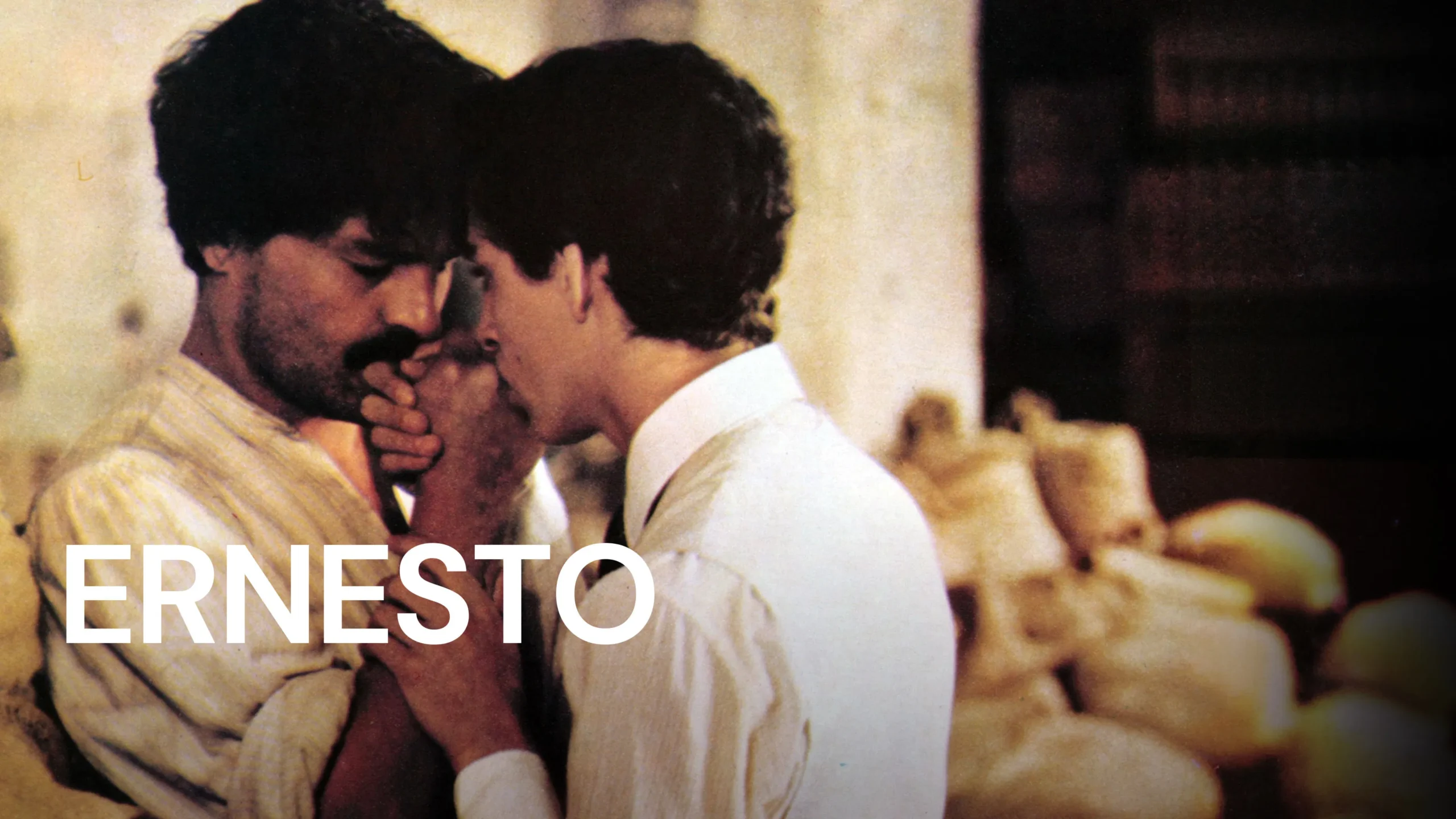
Director Salvatore Samperi’s 1979 Italian gay classic film Ernesto tells a rather complex and fascinating period coming of age story of same-sex relations, with plenty of passionate emotional feeling, lusty sexual attraction and elaborate period detail unfolding in an extraordinarily plush production. It’s very much an old-school film of its time. The film-making style has dated, though quite elegantly, and the theme’s shock value has faded, but the story and issues involved remain fascinating, current and relevant.
The film must have been really quite a bit shocking in its day, and is still a provocative eye-opener. The author of its source book, Saba Umberto, realised that his work would upset most readers in Italy in the 1950s and could not be published, unable even to find the strength to finish it.
The film is far from sexually explicit, its treatment of adolescent sexuality more along the lines of innocent sensuality, though even so it is occasionally sexually teasing and titillating, and also the storylines controversially involve young people. Throughout, there is feeling of doom, and of something awful about to happen. The good news is that it isn’t that kind of story at all. Instead, the tone is warm and sympathetic, with a cheeky, cynical, unexpected sudden ending.
It is all very old fashioned of course. The 1911 era of the setting is reflected in the Fifties age the source novel the book was written, and further in the Seventies age the film was made. It’s all long ago and far away. It should by out of date, consigned to the dustbin of history, maybe, And, yet, it remains relevant. It should be pointed out it is quite playful and entertaining too. If it were a book (and it was) it would be a page turner. Whatever’s going to happen next?
The story unfolds against a lavishly re-created realistic-looking depiction of its social setting. Visually, it is quite remarkable, with a gorgeous production, filmed on glorious locations. and lovely widescreen cinematography by Camillo Bazzoni. On the downside, there is an unpleasant and insistent score by Spanish Basque composer Carmelo Bernaola (16 July 1929 – 5 June 2002). Ah, well, nobody’s perfect.
The performances are finely tuned. The young German actor Martin Halm (born 9 July 1961 in Munich) plays the hero Ernesto with style and bravado as he navigates teenage sexual and social relationships in an antique era. He’s just right young cocky smoothie the role needs. He keeps the character just this side of sympathetic, despite his serial betrayals. Michele Placido won the Silver Bear for Best Actor at the 29th Berlin International Film Festival as the warm-hearted lover he betrays.
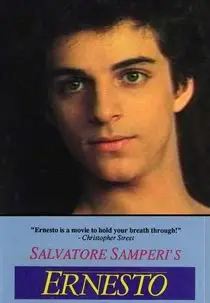
Martin Halm stars as privileged 17‑year‑old Ernesto, who is raised by his Jewish mother (Virna Lisi), Uncle Giovanni (Francisco Marsó) and Aunt Regina (Conchita Velasco) and placed in a trading‑company office In 1911 Trieste, apprentice clerk to flour merchant Carlo Wilder (Turi Ferro). Uninterested in the job, he dreams of becoming a concert violinist. One day while alone in the storeroom, he is approached by a handsome, decade-older, hairier labourer (Michele Placido), and they begin an intense clandestine sexual relationship. It’s all about experimenting with sex for the boy, but the man starts falling in love with him. After an encounter with a sympathetic young female prostitute, he ends the liaison, quits his job, and devotes himself to studying the violin.
At a concert he befriends 15‑year‑old violin prodigy Emilio (Ilio), forming an intense, jealous, and possessive bond. But Ernesto meets Emilio’s twin sister Rachele, leaving Ernesto conflicted between his feelings for the brother and his attraction to the sister, both of them having fallen desperately in love with him.
[Spoiler alert] Ernesto marries the sister, resolving his tricky relationships with all the adults, but snubbing the distraught brother and also denying his gay sexual past when he encounters his first lover and refuses to recognise him, leaving him desolate on the street.
Emilio and Rachele are both played by the same actress (Lara Wendel). It’s a clever idea, very confusing and unsettling for Ernesto and the audience, and works a treat in the film. Wendel doesn’t have much to do in either role except look enticing, like Tadzio in Death in Venice, but she does it well in both roles. However she shines in a particularly good scene where she has to play both brother and sister, dressing up as each other, then, back as a girl, cutting her long hair and pretending she is a boy so that the hero would fancy her like he does her brother!
Talking Death in Venice, the film has echoes of that one, and Salvatore Samperi’s film isn’t felt too much in the shade by Visconti’s. It’s less grand, less operatic, less long, but not really that much less impressive and effective.
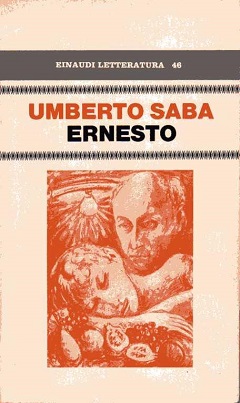
The screenplay by Barbara Alberti, Amedeo Pagani and Salvatore Samperi is freely adapted from the unfinished novel Ernesto by Umberto Saba (1883–1957), written in 1953 and published posthumously in 1975. It is largely autobiographical and was his only work of fiction. In August 1953 Saba ordered the destruction of his manuscript and the novel was left unfinished at his death in 1957, but his daughter Linuccia arranged for its publication by Einaudi in 1975.
Director: Salvatore Samperi
Writers: Umberto Saba (novel), Barbara Alberti, Amedeo Pagani, Salvatore Samperi.
Stars: Martin Halm, Michele Placido, Virna Lisi.
© Derek Winnert 2025 – Classic Movie Review 13,821
Check out more reviews on http://derekwinnert.com

Recent articles
- Scream 4 [SCRE4M] ** (2011, Neve Campbell, Courteney Cox, David Arquette, Hayden Panettiere, Anthony Anderson, Alison Brie, Adam Brody, Rory Culkin) – Classic Movie Review 13,86428 Feb 2026
- Best zombie movies27 Feb 2026
- King of the Zombies *** (1941, Dick Purcell, Joan Woodbury, Mantan Moreland, Henry Victor, John Archer) – Classic Movie Review 13,86326 Feb 2026
- The Lamp in Assassin Mews *** (1962, Francis Matthews, Lisa Daniely, Ian Fleming, Amy Dalby) – Classic Movie Review 13,86224 Feb 2026
- Strange River [Estrany riu] **** (2025, Jan Monter, Nausicaa Bonnín, Jordi Oriol, Francesco Wenz, Bernat Solé, Roc Colell) – Classic Movie Review 13,86121 Feb 2026
Recent comments
- The President’s Lady ** (1953, Charlton Heston, Susan Hayward, John McIntire, Fay Bainter) – Classic Movie Review 13,846 | Derek Winnert on The Buccaneer *** (1958, Yul Brynner, Claire Bloom, Charles Boyer, Inger Stevens, Henry Hull, Charlton Heston) – Classic Movie Review 13,844
- Straight Up *** (2019, James Sweeney, Katie Findlay, Dana Drori, James Scully, Tracie Thoms, Betsy Brandt, Randall Park) – Classic Movie Review 13,839 | Derek Winnert on Twinless **** (2025, Dylan O'Brien, James Sweeney, Aisling Franciosi) – Classic Movie Review 13,838
- Phantom Killer ** (1942, Dick Purcell, Joan Woodbury, John Hamilton, Warren Hymer) – Classic Movie Review 13,837 | Derek Winnert on The Sphinx ** (1933, Lionel Atwill, Sheila Terry, Theodore Newton) – Classic Movie Review 13,836
- Detour ***** (1945, Tom Neal, Ann Savage, Claudia Drake, Edmund MacDonald) – Classic Movie Review 1,547 | Derek Winnert on The Last Crooked Mile *** (1946, Don Barry, Ann Savage, Adele Mara, Tom Powers, Sheldon Leonard, Nestor Paiva) – Classic Movie Review 13,834
- Big ***** (1989, Tom Hanks, John Heard, Jared Rushton, Robert Loggia, David Moscow, Mercedes Ruehl, Jon Lovitz, Josh Clark, Kimberlee M Davis, Elizabeth Perkins) – Classic Movie Review 287 | Derek Winnert on 18 Again! *** (1988, George Burns, Charlie Schlatter, Tony Roberts, Anita Morris, Red Buttons, Pauly Shore) – Classic Movie Review 13,815